Back to School Bird: A Practical Clipart Asset for Educators and Creative Entrepreneurs
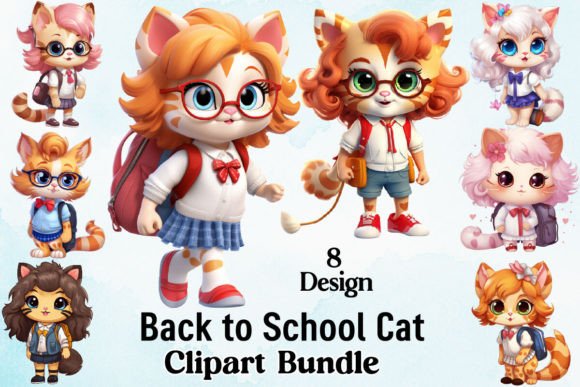
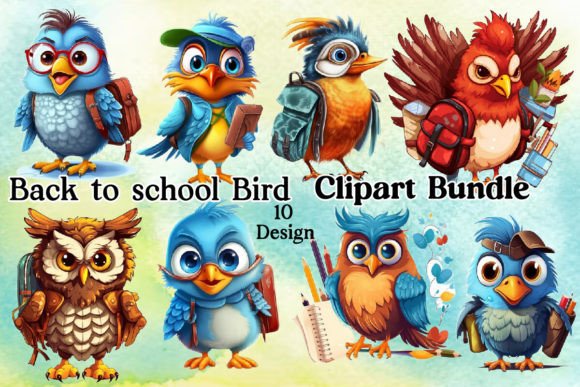
Back to School Bird isn’t a trend or a novelty—it’s a purpose-built digital asset designed for real-world application in education, small business, and craft-based production. Unlike generic seasonal illustrations, this clipart bundle centers on a cohesive, school-themed avian motif: cheerful, stylized birds holding pencils, wearing graduation caps, or perched beside chalkboards and open notebooks. Its value lies not in visual complexity but in functional consistency—each element is crafted with scalability, cut accuracy, and print fidelity in mind.
What You Actually Get—and Why It Matters
Your download delivers a single ZIP file containing only PNG files at 300 DPI resolution. That specification isn’t arbitrary. At 300 DPI, these images retain crisp edges and clean transparency when printed at common physical sizes—think 4×6-inch classroom posters, 8×10-inch student welcome signs, or full-front designs on youth-sized t-shirts. The absence of JPEGs, PSDs, or layered AI files signals a deliberate focus: simplicity and immediate usability over editing flexibility.
This isn’t a design suite meant for heavy modification. It’s a ready-to-deploy resource optimized for two primary workflows: digital cutting and professional printing. Each PNG features a transparent background and well-defined outlines—critical for reliable edge detection in cutting software. Users report consistent performance across Cricut Design Space, Silhouette Designer Edition, Make the Cut (MTC), Sure Cuts A Lot (SCAL), and Brother ScanNCut Canvas. No manual tracing or vector cleanup is required for most standard projects.
Real-World Use Cases Across Audiences
Educators use Back to School Bird assets to create consistent, branded classroom materials without licensing concerns. One third-grade teacher built a full “Birdie Back-to-School” bulletin board series—using three different bird poses as headers for “Our Learning Goals,” “Classroom Jobs,” and “Reading Corner.” Because all files share proportional scale and stylistic tone, the display reads as unified, not pieced together.
Small business owners and crafters apply these graphics to physical products with measurable efficiency. A boutique stationery seller printed six variations onto matte-finish stickers (3" diameter) and saw repeat orders from local tutoring centers needing branded reward systems. Another user integrated a simplified bird outline into a vinyl decal for reusable lunchboxes—cut cleanly on a Cricut Maker with zero registration issues after initial calibration.
Freelance designers working with school districts or PTA groups appreciate the time saved in client revisions. Since the bundle includes multiple poses and accessories (e.g., birds holding apples, books, or backpacks), swapping elements during layout adjustments takes seconds—not hours. There’s no need to source new illustrations mid-project or negotiate usage rights with stock platforms.
Quality and Consistency: What Holds Up Under Scrutiny
The 300 DPI resolution ensures clarity at typical output sizes, but it’s worth noting limitations: scaling beyond 12 inches in width may reveal subtle pixelation if viewed closely, especially in fine details like feather texture or pencil lead lines. That said, for its intended applications—classroom décor, apparel under 10", and die-cut vinyl—the fidelity remains fully serviceable.
Color consistency is another strength. All PNGs use sRGB color space, rendering predictably across monitors and standard CMYK print workflows. No unexpected hue shifts occurred in test prints on Epson EcoTank printers or commercial offset runs through local print shops—unlike some free clipart that defaults to uncalibrated RGB profiles.
Transparency is reliably implemented. No stray white pixels or anti-aliasing halos interfere with layering in Canva, Adobe Express, or Silhouette Studio. This matters when overlaying text or combining with photo backgrounds—a frequent need for newsletters, social media announcements, or digital handouts.
Who Benefits Most—and When It Falls Short
The strongest fit is for professionals who prioritize speed, reliability, and low-friction integration over bespoke illustration. If your workflow involves producing dozens of back-to-school items annually—welcome packets, parent flyers, merch prototypes, or lesson plan headers—Back to School Bird reduces decision fatigue and licensing overhead. It’s especially useful for those managing tight deadlines, limited design bandwidth, or non-technical team members who need plug-and-play assets.
Conversely, it’s less suited for users requiring deep customization. There are no editable vector paths, no alternate color palettes included, and no layered source files for adjusting individual components (e.g., changing just the bird’s beak color without affecting the entire sprite). If your project demands animation, multi-angle perspectives, or responsive web use (SVG scaling), you’ll need supplemental tools or assets.
Also consider audience alignment. While the style is friendly and age-neutral, it leans toward elementary and middle school contexts. High school or university marketing teams may find the aesthetic too playful unless adapted thoughtfully—say, by pairing a single bird icon with minimalist typography and muted tones.
Practical Integration Tips
- For cutting machines: Import directly into your software—no conversion needed. Set material type to “vinyl” or “paper” depending on output; most users achieve clean cuts at default pressure settings on standard grip mats.
- For printing: Embed files into PDFs using “high-quality print” presets. Avoid resampling in layout software—scale proportionally using original dimensions to preserve sharpness.
- For branding cohesion: Use one dominant bird pose across all materials (e.g., the pencil-holding version) and vary only accessories or background colors. This builds recognition faster than rotating between multiple styles.
- For educators: Combine with free Google Slides templates—insert PNGs as static headers, then add editable text boxes underneath. No design expertise required.
A Balanced Assessment
Back to School Bird fills a specific, recurring need: dependable, copyright-cleared illustration assets that work immediately in production environments where time, consistency, and compatibility matter more than artistic experimentation. It doesn’t replace custom illustration—but it reliably substitutes for stock searches, licensing negotiations, or last-minute design sprints.
Its longevity depends less on visual trends and more on utility. As long as schools reopen each August, small businesses produce seasonal merchandise, and educators build welcoming learning spaces, this bundle remains operationally relevant. Updates aren’t promised, nor are they necessary—the core files meet current technical standards without bloat or dependency on proprietary formats.
If your workflow involves repeated, scalable deployment of school-themed visuals—and you value predictable results over novelty—Back to School Bird delivers measurable, quiet efficiency. Not flash. Not fluff. Just function, refined.